


Anyone who has spent a few years living in Western Pennsylvania knows that the legendary humidity of a Pittsburgh summer is practically a local celebrity. There are those July afternoons when the air feels thick enough to carve with a knife and simply stepping outside feels like walking into a warm, damp sponge. While we often think of humidity as an outdoor nuisance that ruins our hair and makes the walk to the car a chore, moisture is a natural part of our local climate that doesn't always stay outside where it belongs. When that heavy, water-laden air finds its way into your living space and settles, it stops being a weather report and starts being a household hazard.
Allowing too much moisture to linger inside your home can lead to serious structural damage, rapid mold growth, and a host of respiratory issues for your family. The bright side is that your home usually has a way of telling you when it is struggling to stay dry, and at Gillece Services, we want to help you decode those signals before they turn into a major renovation project.
Visible Signs of Excess Moisture
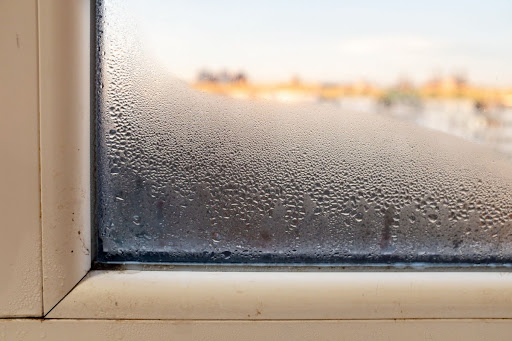
Your home is a physical structure that responds to its environment, and when the internal humidity consistently climbs above 50%, the house itself begins to show signs of strain. One of the most common "early warning" signs is fogged windows or condensation on the glass. If you notice a persistent mist or actual water droplets forming on the inside of your windowpanes—especially in the morning—it means the warm, moist air in your room is hitting the cooler surface of the glass and turning back into liquid. If this happens frequently, the water eventually trickles down into the wooden frames, leading to rot and window failure.
Beyond the windows, look at your walls and ceilings. High humidity can cause wallpaper to peel at the seams or paint to blister and bubble. In rooms like bathrooms or kitchens, you might notice damp spots or dark, discolored patches on the ceiling. These aren't always caused by a plumbing leak; often, they result from moisture in the air condensing in stagnant corners. If left unaddressed, these damp spots become the perfect breeding ground for "black spots" or fuzzy growth, which are the first visible colonies of mold and mildew taking hold in your drywall.
The "Scent" of Humidity
Sometimes you can smell a humidity problem before you can see it. We all know that distinct "old basement" smell, but if that scent is wafting into your living room or bedrooms, your indoor air quality is likely compromised. This musty, earthy odor is actually caused by microbial volatile organic compounds (mVOCs). These are gases released by mold and fungi as they grow and consume organic materials such as wood, carpet padding, or paper-backed insulation.
A humid home acts like an incubator. In damp conditions, microscopic organisms thrive and multiply, releasing these odors as byproducts of their life cycles. If your home has a persistent "stale" or "sour" scent that doesn't go away even after you open the windows or light a candle, it is a strong indicator that moisture is trapped in your upholstery, rugs, or wall cavities. This isn't just an aesthetic issue; those odors are a warning that you are breathing in fungal spores and biological pollutants that shouldn't be there.
Physical Symptoms: How Humidity Affects You
A home with too much humidity doesn't just feel "sticky," it can actually make you sick. For people who deal with seasonal allergies or asthma, high humidity is a constant trigger. Dust mites, which are one of the most common household allergens, absolutely love moisture. They don't drink water; they absorb it from the air, meaning a humid home is a paradise for them to reproduce.
You might also notice that your sleep quality begins to suffer. When the air is saturated with water, your body’s natural cooling mechanism—sweating—becomes much less effective because the sweat cannot evaporate into the already-wet air. This leads to tossing and turning and a "clammy" feeling that makes it impossible to get deep, restorative sleep. Furthermore, excess moisture can wreak havoc on your skin, leading to heat rashes or exacerbating conditions like eczema. If your family seems to be suffering from perpetual "colds," itchy eyes, or skin irritation that only happens when you’re at home, the moisture level in your air is a prime suspect.
How Your HVAC System Manages Moisture
Most homeowners view their air conditioner as a "cold air machine," but its technical name is much more accurate. A primary function of your AC system is to act as a massive dehumidifier. As the warm air in your home is pulled across the cold evaporator coils, the moisture in that air condenses into liquid (much like the "fog" on a cold soda can) and is drained away through a condensate line.
However, during a particularly brutal Pittsburgh heatwave, a standard AC unit might struggle to keep up with both the heat and the moisture. This is where a whole-home dehumidifier becomes an absolute game-changer. Unlike small portable units that you have to empty manually, a whole-home system is integrated directly into your ductwork. It monitors the air's humidity as it circulates and removes excess moisture before it ever reaches your rooms. This allows your AC to run more efficiently because "dry" air feels much cooler to the human body than "wet" air at the same temperature. By installing a whole-home solution, you can often turn your thermostat up by a few degrees and feel even more comfortable, saving you money on your monthly energy bills.
Professional Solutions with Gillece Services
Achieving the perfect balance of indoor air quality isn't a guessing game; it requires a professional touch and a deep understanding of how air moves through a home. At Gillece Services, we have spent more than four decades helping our Pittsburgh neighbors navigate the challenges of our local climate. We know that a 1920s brick home in the city has very different moisture needs than a modern, airtight suburban build, and we have the expertise to treat each one with the care it deserves.
Our team uses advanced diagnostic tools to perform comprehensive indoor air quality assessments. We don't just look for the symptoms; we find the source. Whether your humidity is coming from a damp crawlspace, an oversized AC unit that is "short-cycling" and failing to dehumidify, or poor attic ventilation, we provide the air purification solutions you need to breathe easy again.
Don't let the Pittsburgh humidity take a toll on your home or your health. Contact Gillece Services today to schedule your indoor air quality assessment. Let us help you create a home environment that is crisp, clean, and perfectly balanced, no matter what the weather outside looks like.