


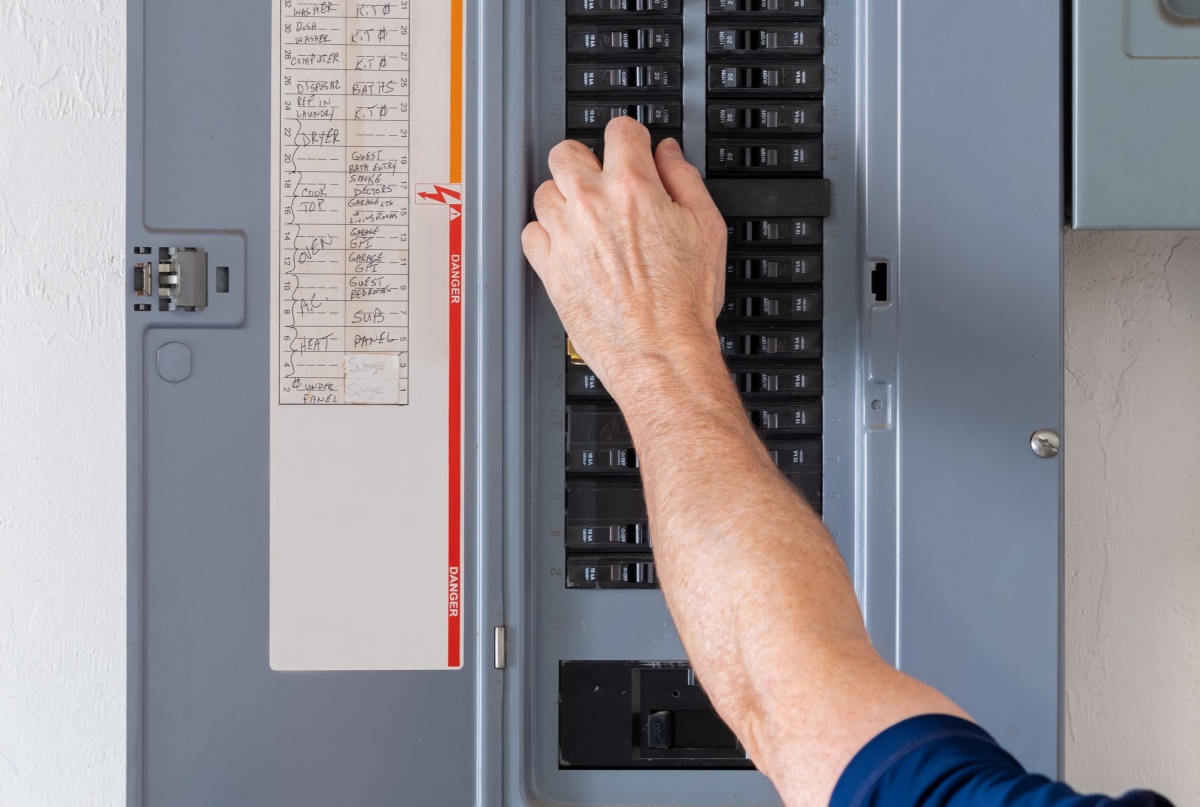
Your home’s electrical panel plays a critical role in keeping electricity flowing safely throughout the house. Yet for many homeowners, the panel itself remains something of a mystery. When a breaker trips or power shuts off in one area, it can be confusing to figure out which switch controls what.
Understanding how your electrical panel works and what each breaker is responsible for can help you manage minor issues, improve safety, and know when it’s time to call a professional.
Let’s take a closer look at how your electrical panel operates and why it matters.
What an Electrical Panel Actually Does
Your electrical panel, sometimes called a breaker box or service panel, acts as the central hub for your home’s electricity. Power from the utility company enters your home through the main service line and flows into this panel before being distributed to various circuits throughout the house.
Inside the panel, circuit breakers divide electricity into smaller pathways. Each breaker controls a specific circuit that powers certain lights, outlets, or appliances.
If a circuit becomes overloaded or experiences a fault, the breaker automatically shuts off power to that circuit. This safety feature helps prevent overheating, electrical damage, and potential fire hazards.
The Role of the Main Breaker
At the top of most electrical panels, you will find the main breaker. This switch controls the power supply to the entire panel.
When the main breaker is turned off, electricity stops flowing to all circuits in the home. Electricians often use this switch when performing electrical work to ensure the system is safe. The main breaker also protects the system from drawing more power than the panel can safely handle.
What Individual Circuit Breakers Control
Below the main breaker, you will see rows of smaller switches. These are individual circuit breakers, each responsible for a specific area or electrical function in your home.
Depending on how your home was wired, breakers may control things such as:
- Kitchen outlets and appliances
- Bathroom outlets and lighting
- Bedroom lighting and outlets
- Living room or hallway lighting
- Garage outlets
- HVAC systems
- Water heaters
- Laundry equipment
Larger appliances often require dedicated circuits because they use a higher amount of electricity. This helps prevent overloads and keeps the rest of your electrical system running smoothly.
Why Breakers Trip
A breaker trips when it detects that a circuit is drawing more electricity than it can safely handle. When this happens, the breaker automatically switches to the “off” position.
Several situations can trigger a breaker to trip:
- Too many devices are plugged into one circuit
- Faulty appliances
- Damaged wiring
- Short circuits
- Ground faults
When a breaker trips occasionally due to an overloaded outlet, resetting it may resolve the issue. However, frequent breaker trips often indicate a deeper electrical problem that should be inspected by a professional.
Why Labeling Your Breakers Matters
Many electrical panels contain breakers that are poorly labeled or not labeled at all. This can make troubleshooting power issues difficult.
Properly labeled breakers help you quickly identify which circuit controls each area of your home. This is especially helpful when:
- Resetting a tripped breaker
- Performing home maintenance
- Installing light fixtures
- Troubleshooting electrical problems
Taking time to label breakers clearly can make your electrical system much easier to manage.
Signs Your Electrical Panel May Need Attention
Your electrical panel should operate quietly and reliably. If you notice unusual behavior, it may indicate that your electrical system requires professional evaluation.
Warning signs may include:
- Breakers that trip frequently
- Flickering or dimming lights
- Burning smells near the panel
- Buzzing sounds from the breaker box
- Warm or hot breakers
These issues can signal overloaded circuits, aging components, or wiring problems. Addressing them early can help prevent more serious electrical hazards.
When Professional Electrical Service Is the Best Choice
While resetting a breaker is simple, diagnosing electrical problems requires training and experience. An electrician can inspect your panel, identify overloaded circuits, and ensure that your system meets current safety standards.
Professional service can help improve the reliability of your electrical system and protect your home from potential electrical risks.
Call Gillece for Trusted Electrical Services
If you are unsure what your breakers control or have concerns about your electrical panel, the experienced team at Gillece is here to help. Our electricians can inspect your panel, identify circuit issues, and ensure your home’s electrical system is operating safely and efficiently.
Whether you need help troubleshooting tripped breakers, improving circuit organization, or addressing electrical concerns, we provide reliable service you can trust. Voted Best Electricians by TribLive in 2024 & 2025.
Contact Gillece today to schedule electrical service in Pittsburgh or one of the surrounding areas. Let our team help keep your home powered safely and smoothly!